
AirFlow stain removal: how it works and who it’s for
AirFlow, also called air polishing, uses fine particles, air and water to lift surface stains and plaque without scraping or vibration. This guide explains how it differs from scale and polish, who it suits, what happens at your appointment and what it costs at Harley Private in Sheffield and Manchester.

If your teeth look dull or stained but you don’t feel you need whitening, a professional AirFlow clean may be exactly what you’re looking for. AirFlow, also called air polishing, is a gentle way of lifting surface stains and plaque without scraping. It’s one of the most comfortable ways to refresh your teeth, and one of the most misunderstood. Here’s how it works, who it suits, what to expect at your appointment and how it fits alongside the rest of your dental care.
What is AirFlow stain removal?
AirFlow uses a controlled stream of fine particles, combined with air and water, to clean the surface of your teeth. Unlike some traditional methods, it doesn’t rely on vibration or pressure, which makes it a comfortable option for many people, including those who feel anxious about dental treatment.
It’s designed to remove surface staining and soft deposits while preserving your natural tooth structure. AirFlow supports oral hygiene and preventative care rather than creating dramatic cosmetic change, and it can leave your teeth feeling noticeably smoother and cleaner than they did before. Because the spray reaches into grooves and between teeth, it can clean areas that a standard polish struggles to get into.
What causes stains on teeth?
Surface stains build up gradually from everyday habits, which is why they often creep up on you without you noticing. The most common causes include:
- Tea, coffee and red wine, which contain pigments that cling to the enamel
- Smoking and vaping
- Dark sauces, berries and fizzy drinks
- Plaque and tartar, which are rough and hold on to stains
- Some mouthwashes and medications, which can contribute in certain cases
Regular professional cleaning helps keep these under control. The earlier you remove them, the less they tend to build up.
Surface stains and deeper discolouration
It helps to understand that not all discolouration is the same. Surface stains sit on the outside of the tooth and respond well to cleaning. Deeper discolouration sits inside the tooth, or comes from age, genetics or past dental work, and no amount of polishing will change it. That kind of colour change responds to whitening, or sometimes to cosmetic treatment such as bonding or veneers.
Your clinician can tell you which type of staining you have, so you don’t spend money on the wrong treatment. Often the answer is a clean first, and then a conversation about whitening if you’d like your teeth to look lighter.
How is AirFlow different from a scale and polish?
A scale and polish uses instruments to remove hardened tartar and then polishes the teeth. AirFlow works differently: a fine spray lifts stains and soft deposits from the surface and from hard-to-reach areas, such as the grooves of your teeth and the areas around braces and aligner attachments.
The two are often combined. If you have tartar build-up, your clinician will usually remove it first and then use AirFlow to finish, so you get the benefits of both. At Harley Private, a scale and polish starts from £75 and AirFlow stain removal from £95, and your clinician will recommend the right combination for your teeth rather than selling you more than you need.
Who is AirFlow suitable for?
AirFlow suits most adults, and it may be a good fit if you:
- Have surface staining from food, drink or smoking
- Want a gentle clean or polish
- Have braces, aligners or attachments that trap plaque
- Prefer a minimally invasive approach
- Feel anxious about traditional dental treatments
- Want to prepare your teeth for whitening or cosmetic treatment
It isn’t a treatment for gum disease, and it may not suit every medical situation. Tell your clinician about your medical history, any allergies, breathing conditions and any sensitivity, so they can adapt your appointment. If your gums are inflamed or bleeding, you may need gum treatment alongside or before a polish.
AirFlow for nervous patients and sensitive teeth
Many people who dislike the sound or feel of scraping find AirFlow far more comfortable. There’s no vibration or pressure against the tooth, and in most cases no anaesthetic is needed. Your clinician will explain each step before they start and can pause whenever you need.
If your teeth are sensitive, let your clinician know before the appointment. Sensitivity varies from person to person, and your clinician will assess whether AirFlow is appropriate and how to make you comfortable.
What happens at your appointment?
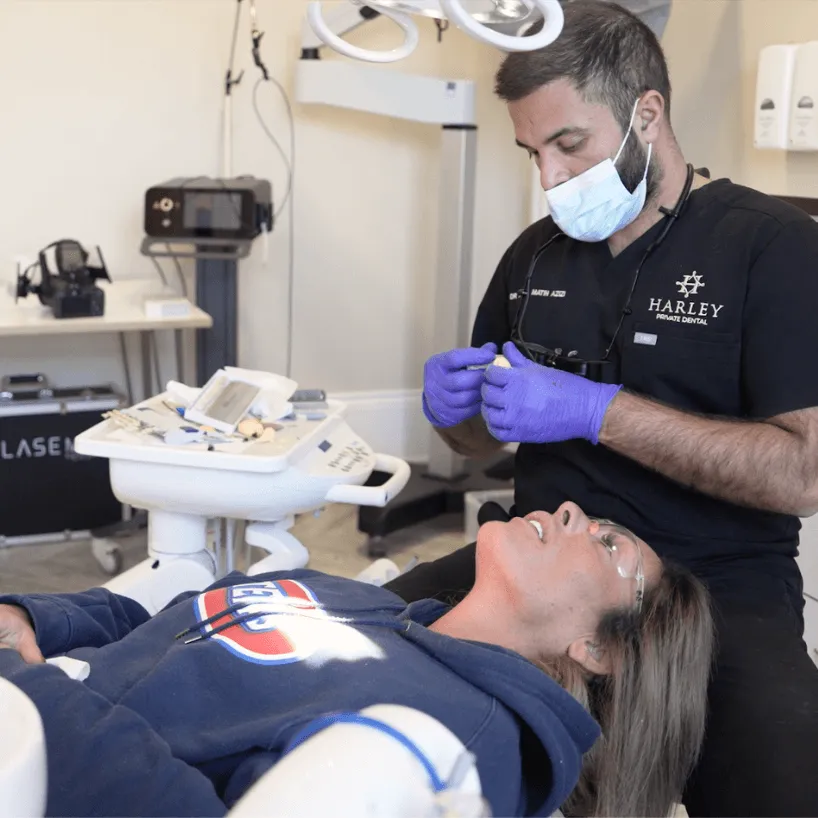
Your clinician will first examine your teeth and gums and confirm that AirFlow is appropriate for you. You’ll be given protective eyewear, and a little lip balm may be applied to keep your lips comfortable.
The fine spray is then directed at each tooth in turn, with suction clearing it as we go. It can feel slightly cool or tickly, and the taste is usually mild, but it shouldn’t hurt. If you have tartar, it will be removed first.
Afterwards, your clinician checks the results, polishes any areas that need it and talks you through how to keep your teeth clean and stain-free. There’s no special recovery time, so you can carry on with your day.
Will AirFlow whiten my teeth?
AirFlow removes surface stains, so teeth often look brighter, but it doesn’t change the natural shade of your teeth. If you want your teeth to look lighter than their natural colour, professional teeth whitening is the next step, and a clean beforehand helps whitening work more evenly. AirFlow also won’t change the colour of crowns, veneers or fillings, which don’t respond to whitening either.
AirFlow before whitening, bonding or aligners
A professional clean is a good starting point before cosmetic treatment, because it gives your dentist a clear view of your natural tooth colour and surface.
- Before whitening: removing surface stains first helps whitening work more evenly
- Before composite bonding: a clean surface helps the material bond, and shows your true tooth shade for colour matching
- During aligner treatment: cleaner teeth around attachments help keep treatment hygienic
Your dentist will advise on the best order for your goals.
How often should you have AirFlow?
It depends on how quickly stains return, which varies with your habits and oral hygiene. Many people choose to have it alongside their regular hygiene appointments, while heavier tea, coffee or red wine drinkers and smokers may benefit from more frequent visits. Your clinician will advise on what suits you, and what’s appropriate for your gums and enamel.
Keeping your teeth stain-free between visits
AirFlow works best alongside good daily habits. These make a real difference:
- Brush twice a day for two minutes with a fluoride toothpaste
- Clean between your teeth daily with interdental brushes or floss
- Rinse with water after tea, coffee or red wine
- Drink dark or acidic drinks through a straw where you can
- Wait around half an hour after acidic food or drink before brushing
- Cut down on smoking, or ask us about support to stop
- Keep up with regular check-ups and hygiene appointments
What does AirFlow cost at Harley Private?
AirFlow stain removal starts from £95, a scale and polish from £75 and a hygiene appointment is £89, and your clinician will confirm your fee before treatment. Our Cosmetic Maintenance Plan, from £30.45 a month, includes an AirFlow hygiene treatment alongside two examinations, two hygiene appointments and a tube of whitening gel each year, and it’s a good way to keep your smile looking its best after cosmetic work. See our fees and finance page for the full list.
Common myths about AirFlow
“AirFlow whitens your teeth.” It removes surface stains, but it doesn’t change your natural tooth shade. Whitening does that.
“It’s only for smokers.” Anyone who drinks tea, coffee or red wine can get surface stains, and many people simply like the fresh, smooth feeling afterwards.
“It replaces brushing.” It doesn’t. Daily cleaning at home is what keeps your teeth healthy between visits.
“It’s the same as a scale and polish.” They work differently, and they’re often used together.
AirFlow questions answered
Is AirFlow painful? It’s generally comfortable and doesn’t involve drilling or vibration. Most people don’t need anaesthetic, and your clinician will talk you through what to expect.
Is it safe for my enamel? AirFlow is designed to be gentle and to preserve your natural tooth structure. Your clinician will assess suitability first.
Can I have it with braces or aligners? Often yes, and it’s useful for cleaning around brackets and attachments. Your clinician will advise.
How long does it take? It’s usually completed as part of a routine appointment, and your clinician will confirm timing when you book.
Can I eat afterwards? You can usually eat and drink as normal, though you may be advised to avoid heavily staining foods and drinks for a short time.
Is it suitable if I feel anxious? AirFlow is often well suited to patients who feel anxious about traditional treatment. Tell us about your concerns and we’ll adjust the approach to help you feel at ease.
Book an AirFlow appointment in Sheffield or Manchester
AirFlow is available at our Sheffield clinic in Nether Edge and our Manchester clinic at Cheadle Royal Business Park. Read more about AirFlow stain removal, or book your appointment and our friendly team will help you choose the right option.

