
TMJ treatment in Sheffield and Manchester
Help for jaw pain, clicking, headaches and teeth grinding. A careful assessment to find the cause, and a practical plan to ease your symptoms and protect your teeth.
Expert-led assessment and treatment for jaw pain
Jaw problems rarely have a single cause, so every plan begins with listening. Your assessment looks at:
✔ Your symptoms, when they started and what makes them better or worse
✔ Your jaw joints and the muscles you use to chew
✔ How far and how smoothly your jaw opens
✔ Your bite and the way your teeth meet
✔ Wear, cracks or sensitivity that suggest grinding or clenching
✔ Your sleep, stress levels and habits
We take a measured, conservative approach, starting with reversible, low-risk options and explaining each step so you know what to expect.
What is TMJ and TMD?
Your temporomandibular joints (TMJ) are the two joints that connect your lower jaw to your skull, just in front of your ears. Along with the muscles around them, they let you chew, speak, yawn and smile.
When the joints or muscles become painful or don't work smoothly, it's called a temporomandibular disorder (TMD), often just called "TMJ". It's common, and for many people it improves with simple self-care and conservative treatment. It's still worth having it checked, because the cause isn't always obvious and ignoring it can lead to ongoing pain or damage to your teeth.
Signs you may have a TMJ problem
Symptoms can be in your jaw, but also in your head, ears and neck
Common signs include:
✔ Pain or tenderness in your jaw, face, or around your ears
✔ Clicking, popping or grating when you open or close your mouth
✔ Jaw stiffness, or difficulty opening your mouth wide
✔ Jaw locking, either open or closed
✔ Headaches, particularly around your temples, or on waking
✔ Earache or a feeling of fullness in your ears, without an ear infection
✔ Neck and shoulder tension
✔ Worn, flattened, chipped or sensitive teeth
✔ Waking with a tight or aching jaw
Not everyone has all of these, and having one doesn't mean you have a TMJ disorder. Your dentist will help work out what's behind your symptoms.
Real patient reviews
Reflections from people who have visited our clinic and shared their experience.
How TMJ problems are treated
Treatment is tailored to your diagnosis and usually starts with simple, reversible options. Depending on your assessment, it may include:
✔ Self-care and jaw exercise advice
✔ A custom-made splint or guard, where recommended
✔ Fitting, bite adjustment and instructions for using your splint or guard
✔ Review appointments to check comfort and progress
✔ Referral for further investigation if needed
We take a measured, conservative approach and explain each step, so you know what to expect and can make an informed decision.
New patient exam: £69
Your complete first appointment with a private dentist, and the first step before your TMJ consultation.

A discussion of your concerns, goals and expectations
A review of your medical and dental history
A full examination of your teeth, gums, bite and jaw
Mouth cancer screening
X-rays or digital scans if clinically required
A clear explanation of your findings, and a referral to your TMJ consultation if appropriate
TMJ consultation: £150
A dedicated appointment to look closely at your jaw and understand what's behind your symptoms.
A detailed discussion of your symptoms, triggers, sleep, stress and history
A thorough examination of your jaw joints and chewing muscles
Assessment of jaw movement, bite and tooth wear
Review of any X-rays or scans
A diagnosis and a personalised treatment plan with a clear fee
TMJ treatment: from £450
Treatment tailored to your diagnosis. Your fee is confirmed at your consultation.

A custom-made splint or guard, where recommended
Fitting, bite adjustment and instructions for use and cleaning
Self-care and jaw exercise advice
Review appointments to check comfort and progress
Referral for further investigation if needed
Affordable monthly payments with 0% finance
We offer finance options through Chrysalis Finance to help make treatment costs more manageable. This allows eligible patients to spread the cost of treatment over time with clear, structured repayments. 0% finance is available on 12-month plans, and longer terms are available at a representative 14.9% APR, subject to status and approval.
Our finance calculator provides an indicative example of how treatment costs may be spread into monthly payments based on a 14.9% APR. Simply enter the estimated treatment cost and select a repayment term to view a guide price. Figures shown are for illustration only. Final repayment amounts will be confirmed following consultation and finance approval.
Using the calculator does not commit you to treatment or finance. It is designed to help you understand your options clearly, without pressure. Full details, including repayment terms and eligibility, will always be explained before you proceed.
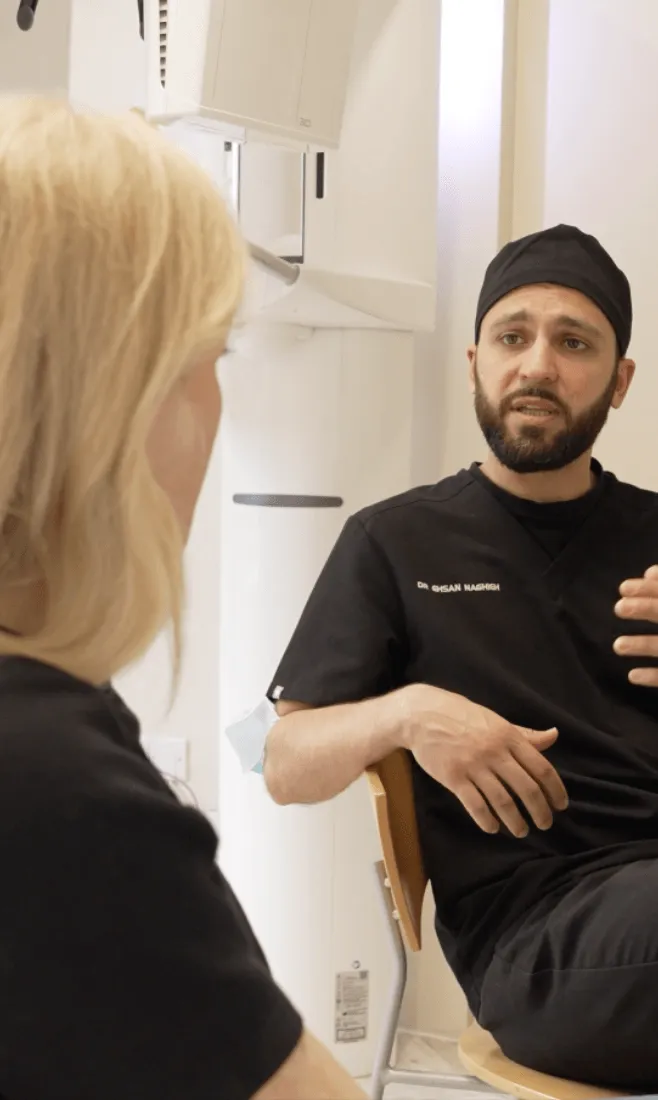
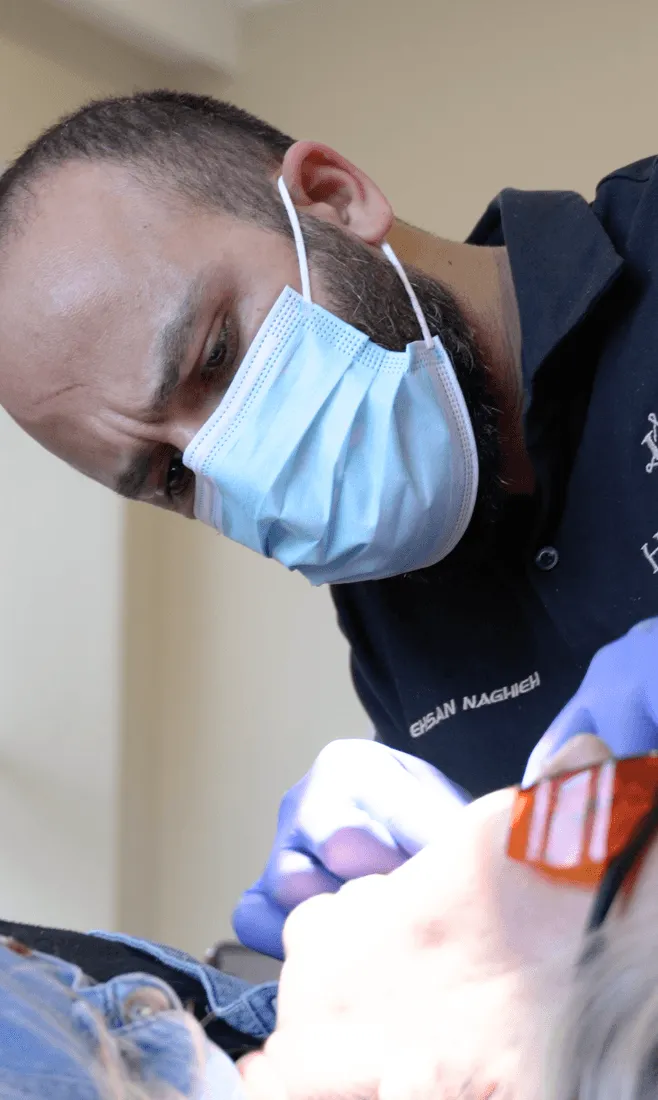
Book your TMJ consultation
Your first appointment is a new patient exam, which gives us a full picture of your mouth before your TMJ consultation. We'll assess your teeth and jaw, explain what's likely behind your symptoms and guide you through the next steps, so you can make an informed decision.
TMJ treatment or a nightguard? Which is right for you?
If you mainly grind and have no jaw pain, a standard nightguard may be enough. If you have jaw symptoms, a TMJ assessment finds the right treatment. Poorly fitting guards can sometimes make jaw problems worse, so it's worth having it checked by your dentist.
Frequently asked questions
These frequently asked questions are designed to give clear, honest information about TMJ problems. If you have further questions, we can discuss them in detail at your appointment.
How much does TMJ treatment cost?

TMJ treatment starts from £450. Before that, you'll need a new patient exam (£69) and a TMJ consultation (£150), so the pathway starts from £669. Your treatment fee is confirmed at your consultation.
Why do I need a new patient exam first?
It gives us a full picture of your teeth, gums and bite before your TMJ consultation, and rules out other causes of your symptoms. It also makes your consultation more useful.
What's the difference between the exam and the TMJ consultation?
The exam is a general check of your mouth. The TMJ consultation is a dedicated, detailed assessment of your jaw joints and muscles, ending in a diagnosis and treatment plan.
What is TMJ?
TMJ stands for temporomandibular joint, the joint that connects your jaw to your skull. People often use "TMJ" to describe pain or problems in the joint and surrounding muscles, which is properly called a temporomandibular disorder.
What does TMJ pain feel like?
It can feel like an ache in your jaw or face, pain around your ears or temples, stiffness, or a click or pop when you open your mouth. It can also cause headaches and neck tension.
Why does my jaw click?
Clicking is common and often painless, and it doesn't always need treatment. If it's painful, getting worse, or comes with locking or limited opening, have it checked.
Can teeth grinding cause jaw pain and headaches?
Yes. Grinding and clenching strain the jaw muscles and joints, and can cause aching, headaches and worn teeth. Many people don't realise they do it because it happens in their sleep.
Will my TMJ problem go away on its own?
Many cases improve with self-care and time, but not all. If your symptoms persist, return or affect your eating or sleep, get them checked.
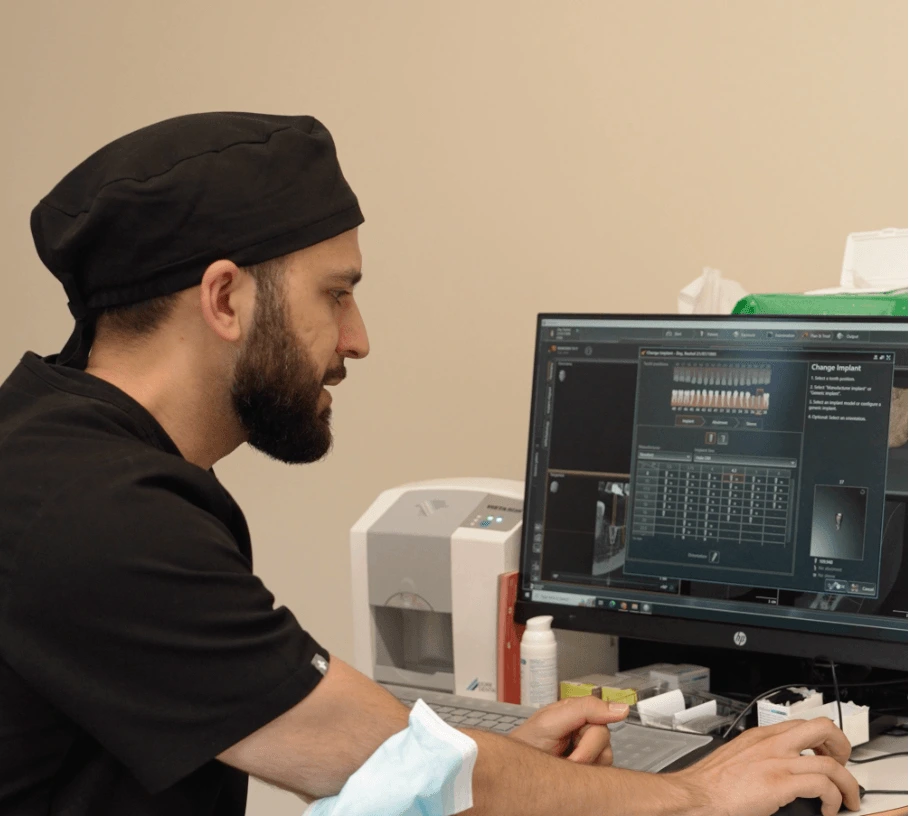


Book your TMJ consultation
If you'd like to book an appointment, have a question about our treatments, or need further information, our friendly team is here to help.